
Skills books › Handyman Services as a Side Hustle in South Africa: Repairs, Quotes and Happy Customers
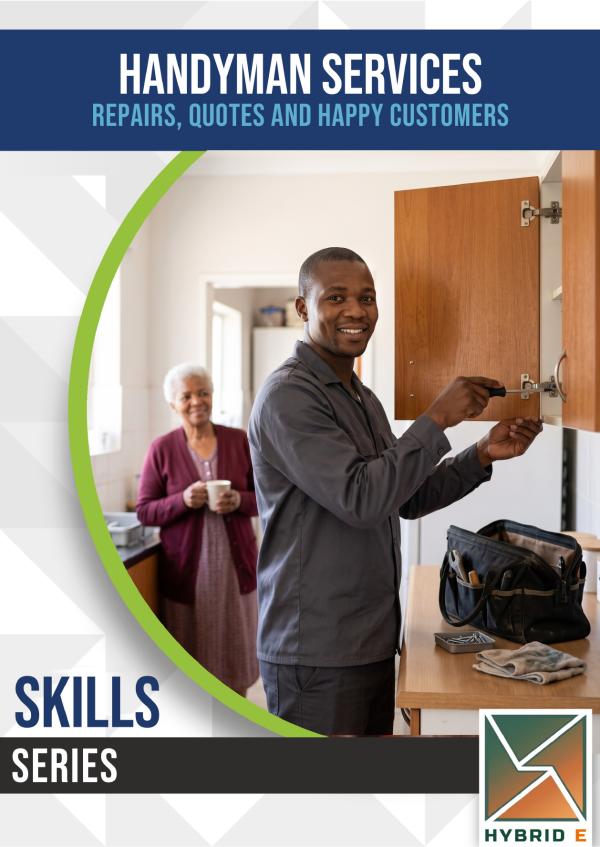
Handyman Services as a Side Hustle in South Africa: Repairs, Quotes and Happy Customers
Hybrid Learning Solutions · e-book
R195 incl. VAT
Read in any web browser, or in the HybridE app on Android.
About this book
Good with your hands? This book shows you how to earn from it as a handyman in South Africa, in plain language: the jobs people pay for, what the law allows you to do, tools and starting costs, working safely in other people's homes, the most common repairs, pricing and quoting, finding and keeping customers, and money and tax.
Who it is for
- People with practical skills who want a side hustle or a small business.
- Retrenched workers and retired tradespeople looking for steady extra income.
- Young people starting out with flat-pack, shelves and small repairs.
- Women who want to offer handywoman services, often to other women.
- Colleges, youth programmes and community groups. Lecturers and trainers get a free Facilitator Guide.
What you will learn
- The jobs people pay a handyman for, and what a month of work can earn.
- Which work belongs to registered people (electrical, gas, geysers, electric fences, asbestos), and how to refer it.
- A starter tool kit, getting to jobs without a bakkie, and your starting costs.
- Working safely: ladders, hidden cables and pipes, power tools, children and pets.
- Choosing the right fixing for each wall, and hanging shelves, rails, mirrors and TV brackets.
- Fixing sticking doors, locks, small panes and loose burglar bars.
- Simple plumbing repairs: taps, running toilets, blocked traps and sealant.
- Patching cracks and holes, touch-ups, and replacing tiles.
- Outside jobs: gutters, gates, fences and re-laying paving.
- Working out your hourly rate and writing a clear quote.
- Finding customers, earning their trust, and caring for older customers.
- Invoices, records, tax, employing a helper and growing.
The people in the book
- Bongani Zulu, 31, in Pietermaritzburg, starts out after being retrenched, with no bakkie.
- Mrs Charmaine Petersen, 48, in Paarl, is a handywoman whose customers are mostly older women living alone.
- Kagiso Molefe, 23, in Rustenburg, starts with flat-pack furniture and curtain rails.
- Mr Dennis Naidoo, a retired master builder in Durban, gives a Tradesman's Note in every chapter.
What is in the book
- 12 chapters in plain, short sentences, with 12 diagrams and 10 photographs.
- Worked examples, with every sum shown, and practice exercises with answers.
- A handyman toolkit: goals and starting costs, a "may I do this job?" list, a tool list, a safety checklist, a job sheet, an hourly rate and quote, an invoice, a materials list, customer records, a job log, a price list and a monthly money summary.
- 144 practice questions in the app.
The book teaches and never advises: it is not legal or tax advice, it does not make you a registered tradesperson, it names no tool brands or hardware stores, and it is not a qualification. Laws are stated in general terms as at November 2026. For fixing your own home, see DIY for the New Homeowner; for a painting business, see House Painting as a Side Hustle.
For lecturers and trainers
A free Facilitator Guide, with session plans for a 25-hour course or a 3-hour handyman basics workshop, teaching notes and every answer, is available to colleges registered with HybridE. To register your college, contact Thandeka on 073 431 6763.
Includes your business file: the book's worksheets as a printable PDF and an Excel workbook, to download once the book is yours.
What is inside
- Chapter 1: Is Handyman Work Right for You?
- Chapter 2: What You May and May Not Do
- Chapter 3: Tools, Transport and Starting Costs
- Chapter 4: Working Safely in Other People’s Homes
- Chapter 5: Walls, Fixings, Hanging and Assembly
- Chapter 6: Doors, Windows, Locks and Burglar Bars
- Chapter 7: Simple Plumbing Repairs
- Chapter 8: Patching, Touch-ups and Tile Repairs
- Chapter 9: Outside Jobs: Gutters, Fences, Gates and Paving
- Chapter 10: Pricing and Quoting
- Chapter 11: Finding Customers and Keeping Them
- Chapter 12: Money, Records, Tax and Growing
- Appendices: Your Handyman Toolkit