Skills books › Hobby
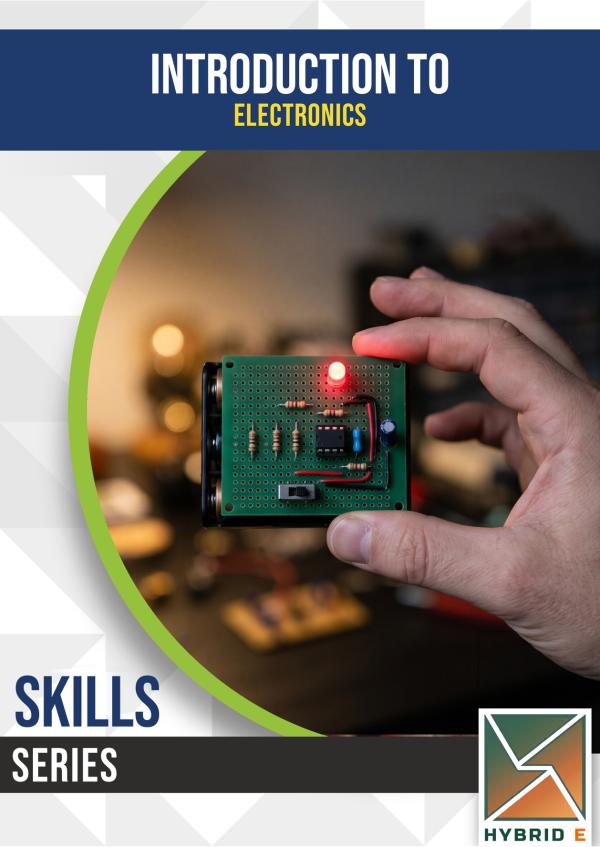
Introduction to Electronics
Hybrid Learning Solutions · e-book
R149 incl. VAT
Read in any web browser, or in the HybridE app on Android.
About this book
A practical, South African first course in electronics, built on one safety rule: every circuit runs on 12 volts or less, from batteries or a certified plug-in adapter, and nothing touches the mains. Twelve chapters follow a call-centre agent in Pietermaritzburg building a load-shedding light for her flat, the retired radio and TV technician who runs her Saturday electronics club, and a school leaver from Polokwane on his way to train as an electrician: what electronics is; safety at the bench, including batteries, lithium cells and soldering; voltage, current, resistance and Ohm's law, with every calculation worked; the multimeter; resistors, capacitors and simple sensors; diodes, LEDs and transistors; batteries, chargers, regulators and fuses; reading circuit diagrams and building on a breadboard; soldering; the 555 timer and first projects, including a fused 12 V load-shedding LED light; microcontrollers and sensors; and fault-finding, safe e-waste disposal, the rules for selling what you build, and where electronics can lead. 32 diagrams and photographs, worked examples, practice exercises with answers, a symbol chart, the resistor colour code, formulas, a starter kit list, safety and fault-finding checklists, a glossary, and 144 Exam prep questions. A Skills Series title. Lecturers: a free Facilitator Guide (session plans, bench safety rules, teaching notes and every answer) is available to colleges registered with HybridE. To register your college, contact Thandeka on 073 431 6763.
What is inside
- Chapter 1: What Electronics Is
- Chapter 2: Safety at the Bench
- Chapter 3: Voltage, Current and Resistance
- Chapter 4: The Multimeter
- Chapter 5: Resistors, Capacitors and Sensors
- Chapter 6: Diodes, LEDs and Transistors
- Chapter 7: Batteries and Power
- Chapter 8: Reading and Drawing Circuits
- Chapter 9: Soldering and Building
- Chapter 10: Integrated Circuits and First Projects
- Chapter 11: Microcontrollers and Sensors
- Chapter 12: Fault-Finding and Next Steps
- Appendix: Charts, Formulas, Checklists, Glossary and Where to Learn More
More Hobby books
- 3D Printing and Making at Home
- Beekeeping for Beginners
- Braai and Outdoor Cooking: Fire, Food Safety, Potjiekos and Cooking for a Crowd in South Africa
- Candle and Soap Making at Home
- Fly Fishing in South Africa: Trout, Yellowfish and Beyond
- Freshwater and Coastal Fishing for Beginners
- Home Baking as a Side Hustle
- Practical Photography for a Digital World
- Sewing and Clothing Repairs: Mending, Alterations and a Small Alterations Service
- Upcycling as a Side Hustle
- Video Making with Your Phone: For Content, Events and Small Businesses
- Woodworking for Beginners: From a Pallet Bench to a Small Workshop