
Skills books › Making Sourdough Bread at Home as a Side Hustle in South Africa: Starters, Loaves, Food Rules and Selling
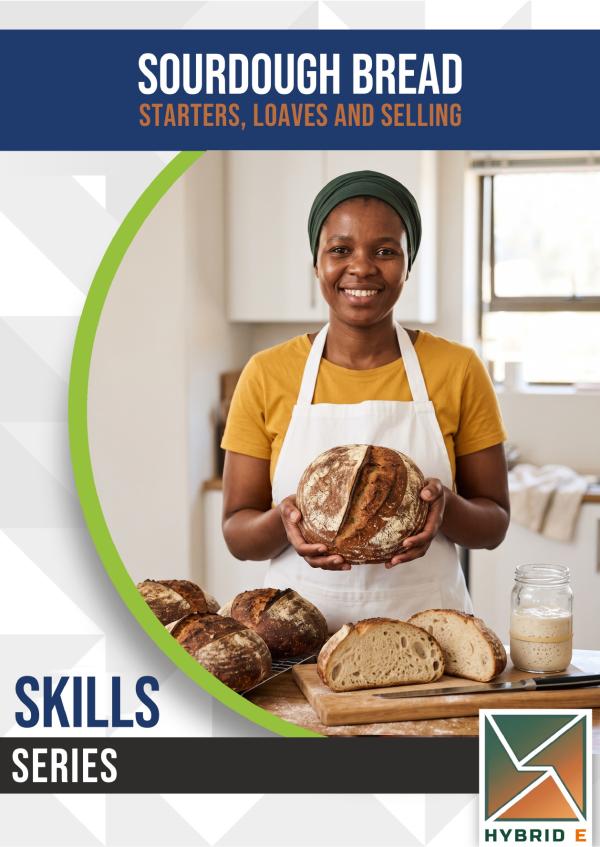
Making Sourdough Bread at Home as a Side Hustle in South Africa: Starters, Loaves, Food Rules and Selling
Hybrid Learning Solutions · e-book
R195 incl. VAT
Read in any web browser, or in the HybridE app on Android.
About this book
Love baking sourdough, and want to sell it? This book shows you how to bake real sourdough well at home and sell it properly, in plain language: the food rules and your Certificate of Acceptability, flour, water, salt and wild yeast, making and keeping a starter, baker's percentages, the country loaf step by step, ovens and heat safety, fixing problems, a small range of breads, honest labels and allergens, costing and the bake week, and selling, records and growing.
Who it is for
- Home bakers who already bake sourdough, or want to learn, and want to sell it.
- Anyone thinking of weekly pre-orders, a market stall or supplying a coffee shop or deli.
- People who want a side hustle they can run around a job and a family.
- Community groups, enterprise programmes and colleges. Lecturers and trainers get a free Facilitator Guide.
What you will learn
- What sourdough really is, why people pay more for it, and what it can earn, honestly.
- The rules for selling food from home: the hygiene regulations, the Certificate of Acceptability, zoning and markets.
- What flour, water, salt and the wild yeast and bacteria in a starter each do.
- How to make and keep a starter, and the danger signs that mean you throw it out.
- Baker's percentages and hydration, and how to scale a recipe from one loaf to twenty.
- The country loaf step by step: levain, mixing, stretch and folds, bulk rise, shaping, cold proof, scoring and baking.
- Ovens, pots and heat safety, and baking around load shedding.
- How to fix dense, flat or gummy loaves, and bake the same loaf every week.
- Rye, wholewheat, seeded loaves, rolls and focaccia, and keeping your menu small.
- Honest labels and allergens, and why sourdough must never be called gluten-free.
- Costing a loaf, setting prices, break-even, pre-orders and planning your bake week.
- Selling at markets and to a coffee shop, records, tax, and growing in steps you can pay for.
The people in the book
- Refilwe Dube, 38, in Bloemfontein, bakes 20 loaves for a Saturday market.
- Carmen Davids, 29, in Cape Town, takes weekly pre-orders with a set collection day.
- Kabelo Seleka, 45, in Pretoria, supplies a coffee shop every morning.
- Ms Ilse Venter, owner-baker of a small artisan bakery in George, gives a Baker's Note in every chapter.
What is in the book
- 12 chapters in plain, short sentences, with 12 diagrams and 10 photographs.
- Worked examples, with every sum shown, and practice exercises with answers.
- A baker's toolkit: goals and costs, a starter feeding log, a recipe card, a bake log, a bake-week schedule, a hygiene and kitchen safety checklist, a Certificate of Acceptability checklist, a label checklist, a costing sheet, a pre-order sheet, a market-day checklist, and a monthly money summary and one-page plan.
- 144 practice questions in the app.
A kitchen that makes food for sale needs a Certificate of Acceptability from your municipality before you sell, and the book never suggests selling without one. Sourdough made from wheat or rye contains gluten: it must never be sold as gluten-free or safe for people with coeliac disease. The law is described in general terms as at November 2026, so check the rules with your own municipality. The book names no brands, products, shops or apps, and every price is an invented example. See also Home Baking as a Side Hustle, Making Beer Bread Outdoors and Starting a Small Business from Home.
For lecturers and trainers
A free Facilitator Guide, with session plans for a 25-hour course or a 3-hour "your first sourdough loaf" workshop, teaching notes and every answer, is available to colleges registered with HybridE. To register your college, contact Thandeka on 073 431 6763.
Includes your business file: the book's worksheets as a printable PDF and an Excel workbook, to download once the book is yours.
What is inside
- Chapter 1: Is a Sourdough Side Hustle Right for You?
- Chapter 2: The Rules for Selling Bread from Home
- Chapter 3: Flour, Water, Salt and Wild Yeast
- Chapter 4: Making and Keeping a Starter
- Chapter 5: Baker’s Percentages and Hydration
- Chapter 6: The Basic Country Loaf, Step by Step
- Chapter 7: Ovens, Pots and Heat Safety
- Chapter 8: Fixing Problems and Getting Consistent
- Chapter 9: Your Range: Rye, Wholewheat, Seeded and More
- Chapter 10: Labels, Allergens and Honest Claims
- Chapter 11: Costing, Pricing and Planning the Bake Week
- Chapter 12: Selling, Records, Tax and Growing
- Appendices: Your Baker’s Toolkit