Skills books › Preserving Food at Home: Jams, Pickles, Drying, Biltong and Bottling in South Africa
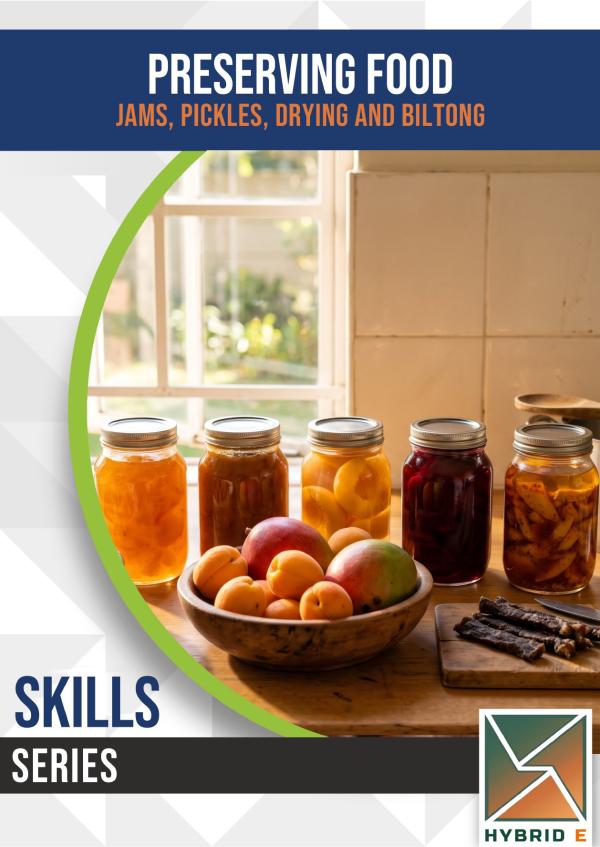
Preserving Food at Home: Jams, Pickles, Drying, Biltong and Bottling in South Africa
Hybrid Learning Solutions · e-book
R149 incl. VAT
Read in any web browser, or in the HybridE app on Android.
About this book
A practical, South African guide to preserving food safely at home: turning a glut of fruit and vegetables, and good meat, into jams, chutneys, atchar, pickles, bottled fruit, dried fruit, biltong and droëwors that keep for the year, as gifts and to sell. Twelve chapters follow a cook in Pinetown with a mango tree, a guava tree and too much wasted fruit, a couple in Ceres who bottle orchard seconds and make biltong for the church fête, and a maker in Lenasia whose mango atchar sells by the jar, with advice from a retired Home Economics teacher in Bloemfontein: the ways to preserve and what each one takes away from spoilage; why food spoils, the acid line and botulism in plain terms; jars, lids, sterilising, the water bath and checking seals; jams, jellies and marmalades and finding the setting point; chutneys, relishes and sauces; vinegar pickles, atchar and fermented vegetables; bottling fruit, with tomatoes and figs made safe with lemon juice; drying fruit, vegetables and herbs, and fruit leather; biltong and droëwors; freezing, blanching and keeping food safe through power cuts; labelling, storing and spotting spoilage; and costing, pricing, selling and a seasonal plan. Every sum is worked, from the extra minutes your town's altitude adds to sterilising and bottling, the setting point of jam in your own kitchen and how many jars a batch fills, to the salt for sauerkraut and biltong, the syrup for a crate of peaches, how much dried fruit and biltong you get from fresh, the cost of a jar of jam with your time included and a market day's real hourly earnings. Only safe home methods are taught: high-acid food in a boiling-water bath, never low-acid food. The rules for selling food are taught in general terms, dated, so you always check with your municipality. 26 diagrams and photographs, worked examples, practice exercises with answers, and a preserving file: a kitchen profile, a safety card, a jar checklist, a setting point record, recipe cards, pickle and ferment, bottling, drying and biltong logs, a freezer list, a spoilage checker, a costing sheet and seasonal plan, a glossary, where to get help, and 144 Exam prep questions. A Skills Series title. No pectin, jar, spice or appliance brands are named or recommended. Lecturers: a free Facilitator Guide (session plans for a 25-hour course or shorter jams-and-chutneys, drying-biltong-and-freezing and taster courses, kitchen safety, teaching notes and every answer) is available to colleges registered with HybridE. To register your college, contact Thandeka on 073 431 6763.
What is inside
- Chapter 1: Getting Started
- Chapter 2: Why Food Spoils and How Preserving Stops It
- Chapter 3: Jars, Lids and Equipment
- Chapter 4: Jams, Jellies and Marmalades
- Chapter 5: Chutneys, Relishes and Sauces
- Chapter 6: Pickles, Atchar and Fermented Vegetables
- Chapter 7: Bottling Fruit
- Chapter 8: Drying Fruit, Vegetables and Herbs
- Chapter 9: Biltong and Droëwors
- Chapter 10: Freezing and Blanching
- Chapter 11: Labelling, Storing and Spotting Spoilage
- Chapter 12: Selling Your Preserves and Your Preserving Plan
- Appendix