Skills books › Vetkoek, Magwinya and Kotas as a Side Hustle in South Africa
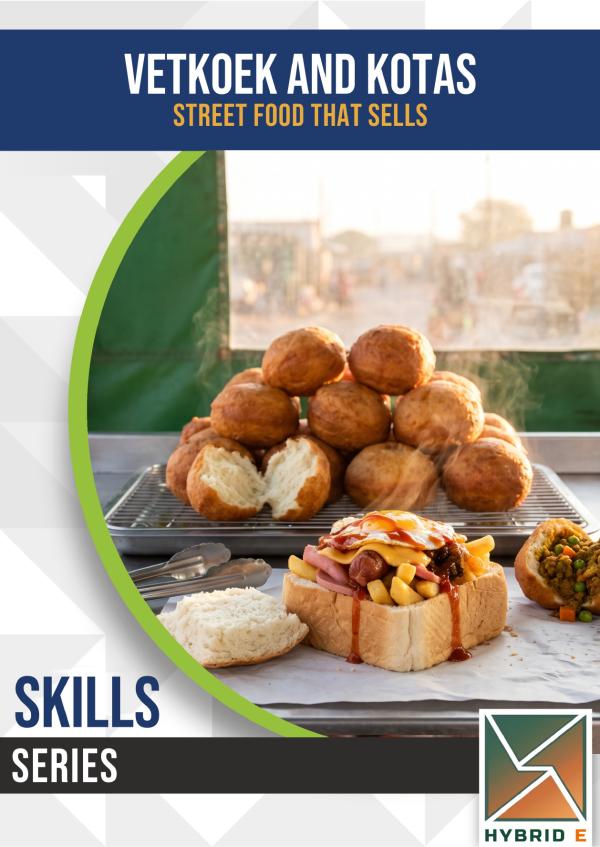
Vetkoek, Magwinya and Kotas as a Side Hustle in South Africa
Hybrid Learning Solutions · e-book
R149 incl. VAT
Read in any web browser, or in the HybridE app on Android.
About this book
Vetkoek and kotas are the street food that sells at school gates, taxi ranks, spaza shops and sports fields. This book shows you how to make them well, sell them safely and know what you really earn.
Who it is for
- People who already fry vetkoek at home and want to sell.
- Anyone starting a kota spot, a weekend stand or a spaza supply.
- Community, church and college courses. Lecturers get a free Facilitator Guide.
What you will learn
- A light yeast dough every time, in summer and winter, and a quick dough without yeast.
- Frying at 170 to 180 °C, and fixing greasy, burnt or raw vetkoek.
- Looking after your oil, getting rid of it safely, and what to do if it catches fire.
- Fillings: curried mince, chicken livers, polony, cheese, atchar, chakalaka and jam.
- Slap chips fried twice, and a kota built the same way every time.
- Food safety, including why polony must stay cold.
- Costing every vetkoek and kota, a price ladder, and your real earnings per hour.
- Selling at schools, ranks and spazas, pre-orders, permits, gas safety and a business plan.
The people in the book
- Ayanda in Mdantsane fries magwinya before dawn for the school gate and the spaza on her street.
- Tumelo in Mamelodi runs a kota spot from a container between a high school and the taxi rank.
- Dumisani in Orlando has a weekend stand at the soccer field and car wash.
- Auntie Rosie, a retired school-kitchen cook in Bishop Lavis, gives advice in every chapter.
What is in the book
- 12 chapters in plain, short sentences, with 26 diagrams and photographs.
- Worked examples, with every sum shown, and practice exercises with answers.
- A business file: dough and frying logs, recipe cards, a kota menu card, a food-safety log, a costing sheet and a business plan.
- 144 practice questions in the app.
The rules for selling food are taught in general terms, so you always check with your municipality. No brands are named or recommended.
For lecturers
A free Facilitator Guide, with session plans, class safety rules and every answer, is available to colleges registered with HybridE. To register your college, contact Thandeka on 073 431 6763.
What is inside
- Chapter 1: Getting Started
- Chapter 2: Ingredients and Oil
- Chapter 3: The Dough
- Chapter 4: Frying Safely and Well
- Chapter 5: Fillings and Sauces
- Chapter 6: Chips and Building a Kota
- Chapter 7: Food Safety
- Chapter 8: Scaling Up and the Morning Rush
- Chapter 9: Costing and Pricing
- Chapter 10: Selling
- Chapter 11: The Legal Side and Gas Safety
- Chapter 12: Growing the Business and Your Business Plan
- Appendix